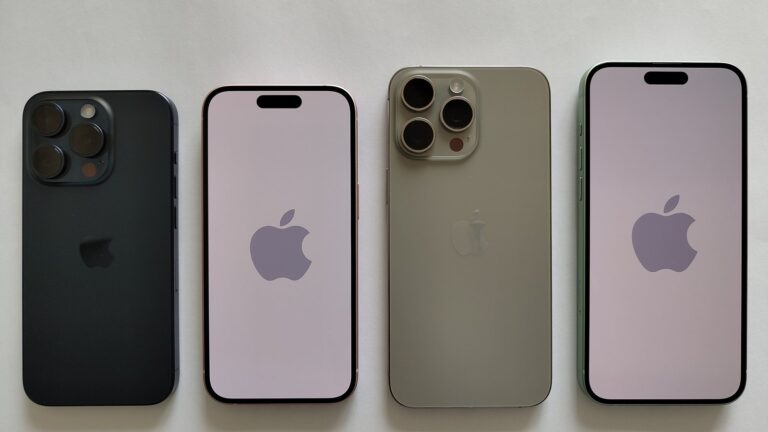

Apple has launched a new iPhone app that lets people in the U.S. ask everyday health questions and get answers grounded in medical research. The catch is that it’s a research study, not a regular product. The Apple Health AI Study App is free on the U.S. App Store, and to join you need to be 21 or older, live in the United States and have an iPhone 15 Pro or later running iOS 26 or later. Apple wants up to 200,000 people to take part, according to Apple’s announcement.
Here’s who can sign up, what the app actually does, what happens to your data and what to keep in mind before you start asking it about your symptoms.
What is the Apple Health AI Usage Study?
Apple announced the Apple Health AI Usage Study on Nov. 15, 2026. It describes it as a virtual research study, with its own app, designed to understand how people use conversational health AI tools. The study looks at what makes people trust an answer, how good the answers are, whether people understand them and whether they lead to everyday health actions.
The answers come from OpenEvidence, a clinical AI platform used by healthcare professionals. Apple says OpenEvidence builds its responses from established medical sources such as The New England Journal of Medicine, the Journal of the American Medical Association and Nature, and each response links to the peer-reviewed citations behind it. Apple designed the research experience around it.
“Health is deeply personal, and conducting a dedicated research study is the most thoughtful way to understand how people engage with, comprehend, and evaluate health AI in everyday life,” Sumbul Desai, M.D., Apple’s vice president of Health and Fitness, said in the announcement.
Who can join, and what do you need?
According to Apple, the study is open to up to 200,000 eligible participants who meet all of these requirements:
- Age: 21 or older.
- Location: United States.
- Phone: an Apple Intelligence-capable iPhone, which means an iPhone 15 Pro or later.
- Software: iOS 26 or later.
Some early coverage said “iPhone 15 or later,” but Apple’s own wording is iPhone 15 Pro or later, so a standard iPhone 15 or 15 Plus won’t qualify. The Verge notes that the app itself doesn’t use Apple Intelligence and isn’t connected to Siri. You type your questions, though you can dictate them with the iOS keyboard.
How to sign up
- Search the U.S. App Store for “Apple Health AI Study App.” It’s published by Apple and is free. The App Store listing shows a size of about 30 MB.
- Open the app and read the study details.
- Choose whether to enroll. During enrollment you also decide whether to share any Apple Health data.
What the app can do
Once you’re in, you can ask it the kind of questions you might otherwise type into a search engine or a chatbot. Apple’s App Store listing says you can use it to:
- understand symptoms or conditions,
- put your personal Health data in context,
- prepare for a medical visit, and
- build a personalized exercise or meal plan.
The answers are meant to explain complex medical information in plain language, with links to the clinical sources. Apple says the study will also look at whether health AI can help people get ready for appointments with their own doctors.
You’re also helping with the research. Participants rate the app’s answers and give feedback, and TechCrunch reports they’ll be asked to take monthly surveys during a study that will run for more than 12 months.
Sharing your Apple Health data is optional
You can choose to share HealthKit data types such as resting heart rate, activity, sleep or lab results. Apple says the point is to test whether personal data makes answers more relevant and easier to understand. If you’d rather keep that data out, you can still use the app without it.
What happens to your data
Privacy is the first thing many people will ask about, so here’s what Apple says, in its own terms:
- No AI training: study data won’t be used to train AI models.
- Your choice: you decide whether to share any HealthKit metrics or survey responses.
- Security: Apple says it has security measures to protect the study data it keeps and the confidentiality of participants’ information.
- Guardrails: the app is designed to spot certain concerning questions and suggest that you follow up with a provider or other resources.
These are company commitments rather than independent findings, so read the study’s consent information in the app before you enroll and share only what you’re comfortable with. The same rule applies to any connected device, from fitness trackers to the new wave of camera-equipped smart glasses.
It’s not a doctor, and Apple says so
Apple is clear on this point. Its announcement says the study app “is not meant to diagnose or treat any condition, or replace the advice of medical professionals,” and that participants should consult a doctor or clinician to address health concerns or verify medical information. The App Store listing repeats that neither the app nor the study provides medical advice, diagnosis or treatment.
Apple also admits the limits of the technology. Its announcement notes that consumer health tools powered by large language models “may at times offer responses that are incomplete or unclear,” which is part of why it’s studying them. Medicine has wrestled with the same trust and transparency questions as AI moves into other areas, such as AI-assisted drug discovery.
A sensible way to use it: treat the answers as background reading that helps you ask better questions, check the linked sources, and take anything worrying to a real clinician. If you have an urgent symptom, don’t wait on an app.
Why Apple is doing this now
People already use chatbots for health questions on a huge scale. TechCrunch notes that OpenAI said earlier this year that users were asking more than 300 million health-related questions each week. Apple’s approach is different: instead of adding health answers straight to Siri or the Health app, it’s running a large, consent-based study first.
“Patients and clinicians are both turning to AI, but the tools they use are being built and tested in separate worlds,” said Robert M. Wachter, M.D., chair of the Department of Medicine at UCSF, in Apple’s announcement.
Apple hasn’t said whether AI health answers will come to the Health app or Siri later, and TechCrunch points out that this isn’t clear yet. Apple says the study’s insights are meant to inform “the responsible design of health AI experiences for Apple and the industry.” It fits a wider pattern: people are getting more comfortable letting AI handle everyday tasks, from health questions to booking trips, but trust still has to be earned.
FAQ
Is the Apple Health AI Study App free?
Yes. It’s a free download from Apple on the U.S. App Store.
Can I join from outside the United States?
No. Apple says the study is open to eligible participants across the United States only.
Does it work on an iPhone 15 or iPhone 14?
No. Apple requires an Apple Intelligence-capable iPhone, which means an iPhone 15 Pro or later, running iOS 26 or later.
Will Apple use my questions to train its AI?
Apple says study data won’t be used to train AI models, and that sharing HealthKit data and survey responses is up to you.
How long does the study last?
TechCrunch reports it will run for more than 12 months, with monthly surveys for participants.
Sources: Apple Newsroom (Nov. 15, 2026), Apple Health AI Study App listing on the U.S. App Store, TechCrunch (Nov. 15, 2026) and The Verge (Nov. 16, 2026). This article is general information, not medical advice. Featured image: “Apple iPhone 15 Pro” via Wikimedia Commons, CC BY-SA 4.0, cropped.